
GBPUSD is holding above the daily support zone at 1.31804–1.32115, but the broader daily trend remains firmly down. The latest daily close is 1.32290; the key question is whether support holds and price can recover the nearby Fibonacci level, or whether a break lower extends the prevailing pressure.
Higher-timeframe context
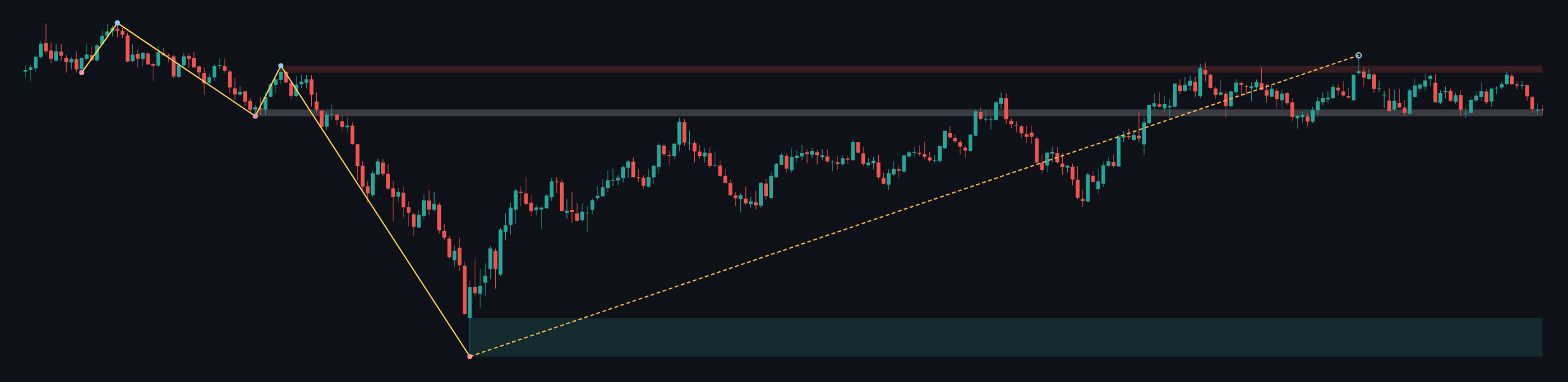
The weekly trend is firmly down, with an upward sub-trend and no reported structure event. The latest weekly close, 1.32313, sits within the weekly broken-retest resistance zone at 1.31602–1.32401. That makes this area important: holding above it could support further recovery, while rejection would leave the broader downtrend in control. The weekly resistance zone at 1.36688–1.37487 remains overhead, and the broader support zone is 1.03535–1.08025. The most recent confirmed weekly swing is a low at 1.03535.
The weekly chart permits a recovery scenario, but it does not yet establish a trend reversal. The larger directional backdrop still favors caution around rallies while price remains within the broken-retest area.
Main-frame structure
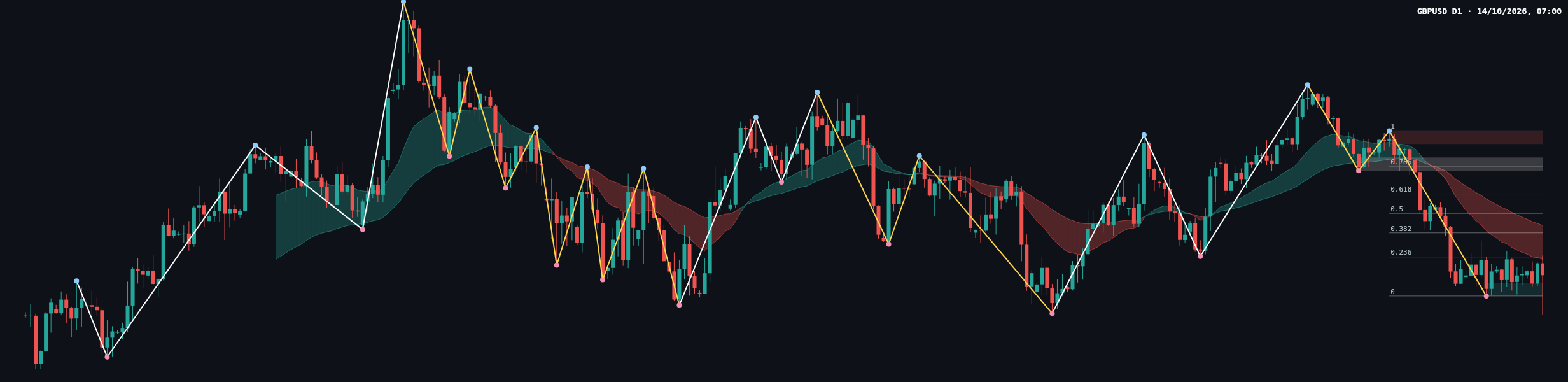
On the daily timeframe, the main trend is also firmly down, while the sub-trend is up. No structure event is reported. The latest confirmed swing low is 1.31804, and the latest close at 1.32290 remains just above the daily support zone of 1.31804–1.32115. The chart shows a sharp decline followed by consolidation near the lows; this is consistent with selling pressure, but the support area has not been confirmed as broken in the supplied data.
The latest completed Dow leg has Fibonacci levels at 1.31804 (0), 1.32718 (0.236), 1.33283 (0.382), 1.33740 (0.5), 1.34197 (0.618), 1.34847 (0.786), and 1.35676 (1). The current retracement ratio is 0.126, below the 0.236 level at 1.32718. A move above that first retracement level would be an initial sign of recovery, not by itself proof of a broader reversal.
The chart does not provide numerical moving-average readings, candle measurements, or volume data in the deterministic report, so those details cannot be assessed precisely here.
Key levels
| Area | Level | Technical context |
|---|---|---|
| Daily support | 1.31804–1.32115 | Nearby support; the latest confirmed daily swing low is 1.31804. |
| First Fibonacci recovery level | 1.32718 | The 0.236 retracement; a level to monitor for evidence of a recovery. |
| Further Fibonacci levels | 1.33283 and 1.33740 | Higher retracement references if price advances beyond 1.32718. |
| Daily broken-retest resistance | 1.34740–1.35051 | A higher resistance area beyond the nearer Fibonacci levels. |
| Daily resistance | 1.35365–1.35676 | Overhead resistance; the upper boundary aligns with the completed leg’s 1 level. |
| Weekly broken-retest resistance | 1.31602–1.32401 | The latest weekly close is within this zone. |
Scenarios
- Bearish continuation: If price breaks below the daily support zone at 1.31804–1.32115 and cannot reclaim it, that would strengthen the continuation case in line with the firm downtrend. The supplied data identifies 1.03535–1.08025 as weekly support, but does not provide an intervening daily downside target. A sustained recovery above 1.32718 would weaken this near-term bearish reading.
- Bullish recovery: If support holds and price recovers above 1.32718, the next Fibonacci references are 1.33283 and 1.33740. A move back below 1.31804–1.32115 would undermine this recovery scenario. Higher resistance remains at 1.34740–1.35051 and 1.35365–1.35676.
- Range-bound consolidation: If price continues to hold the support zone but remains below 1.32718, the current balance may persist between support and the first Fibonacci recovery level. A break below support or a sustained move above 1.32718 would challenge that range interpretation.
The broader bias remains cautious while the daily trend is firmly down, but the nearby support zone leaves room for a recovery attempt. How price behaves around 1.31804–1.32115 and 1.32718 is the clearest near-term guide.
This article is technical analysis for information and reference only, not investment advice. Markets carry risk, and readers are responsible for their own decisions.